Can Foreigners Buy Property in Vietnam? The 2026 Guide to Laws, “Pink Books,” and the 50-Year Rule
Last updated: February 28, 2026 (Originally published: January 7, 2026)
Everyone wants the same thing: a condo overlooking the Saigon River. Floor-to-ceiling windows. A rooftop pool. Maybe in Vinhomes Central Park or the new Grand Marina. You picture yourself sipping cà phê sữa đá on the balcony, watching container ships drift toward the South China Sea.
Then you ask the broker: “Can I actually own this?”
The answer is yes. But it comes with asterisks. Several of them. I’ve helped dozens of foreign investors navigate this process since 2016, and the gap between what agents tell you and what the law actually says is where people get hurt. This guide covers every constraint, every trap, and the alternative most agents will never mention.
The Short Answer: Yes, But With 3 Constraints (30%, 50 Years, Condos Only)
Yes, foreigners can buy residential property in Vietnam.
The Housing Law of 2014 opened the door. But the Vietnamese government did not throw that door wide open. They installed locks, quotas, and a timer.
Three constraints define what foreign ownership actually means here:
Constraint #1: The 30% Rule
Foreign individuals and organizations cannot own more than 30% of the total units in any single condominium building. For landed houses in a ward (phường), the cap is 250 units.
This means two things for you:
First, popular buildings fill up. Vinhomes Central Park, Masteri Thao Dien, The Marq — these are magnets for foreign buyers. If the 30% quota is exhausted, you cannot purchase directly from a Vietnamese national. Your only option is to buy from another foreigner who already holds a unit within that quota.
Second, you must verify quota availability before you pay a deposit. Ask the developer or building management for written confirmation of the current foreign ownership percentage. Do not trust verbal assurances. If the building is at 29.5% and three other foreigners are in the queue ahead of you, you may be out of luck.
Constraint #2: The 50-Year Ceiling
Foreign ownership is not perpetual. It is time-bound.
When you purchase property as a foreigner in Vietnam, your ownership rights are valid for 50 years from the date your Pink Book (Sổ Hồng) is issued. The Pink Book is Vietnam’s Certificate of Land Use Rights — the only document that proves legal ownership.
The law allows for a one-time extension of another 50 years, subject to approval. But “subject to approval” is a phrase that should make any investor pause. The renewal is not automatic. It depends on future government policy, which no one can predict with certainty.
Exception: If you marry a Vietnamese citizen, you gain the same property rights as locals — including freehold (permanent) ownership. The 50-year clock disappears.
Constraint #3: Condos Only (With Rare Exceptions)
Foreigners are largely restricted to apartments and condominiums in designated commercial housing projects. You cannot purchase land, most townhouses (nhà phố), or standalone villas in the way a Vietnamese citizen can.
Some villa projects have been approved for foreign ownership, but these are uncommon and typically in high-end developments. Always confirm with legal counsel whether a specific project is authorized for foreign buyers.
The Trap You Must Avoid: SPA vs. LTL (Lease)
This is where many foreign buyers get burned — and where real estate scams targeting foreigners often originate. Two ownership structures exist, and confusing them can cost you significant money and legal headaches.
Why LTL Is Not Ownership
SPA (Sales Purchase Agreement) = Real Ownership
Under an SPA structure, you receive the Pink Book (Sổ Hồng) in your name. This grants you legal ownership rights for 50 years (extendable). You can sell the property, lease it out, inherit it to your heirs, or transfer it to another buyer. The Pink Book is registered with the government. It is the gold standard.
LTL (Long-Term Lease) = Not Ownership
If the 30% foreign quota is full, or if the development is not approved for foreign ownership, some developers will offer a 50-Year Lease Contract instead. This is commonly marketed as the “same thing” or “just as good.”
It is not.
With an LTL, you do not receive a Pink Book. You hold a private contract with the developer — not a government-registered title. This affects everything: resale value (buyers are wary), mortgage financing (banks avoid LTL properties), and your legal recourse if disputes arise.
| Factor | SPA (Ownership) | LTL (Lease) |
|---|---|---|
| Pink Book? | Yes | No |
| Government Registered? | Yes | No (private contract) |
| Can Sell Freely? | Yes | Difficult |
| Can Lease Out? | Yes | Usually yes |
| Bank Mortgage? | Possible | Very unlikely |
| Resale Value | Market rate | Significant discount |
Practical advice: Unless you have a specific short-term strategy and fully understand the risks, avoid LTL arrangements. If a developer can only offer you a lease, walk away and find a project with available SPA quota.
Vietnam vs. Thailand: Foreign Condo Ownership Compared
Many investors considering Southeast Asian property look at both Vietnam and Thailand. The systems differ significantly.
| Factor | Vietnam | Thailand |
|---|---|---|
| Foreign Quota | 30% of building | 49% of building |
| Ownership Type | 50-year (renewable) | Freehold (permanent) |
| Title Document | Pink Book (Sổ Hồng) | Chanote (title deed) |
| Land Ownership | No | No (condo unit only) |
| Funds Requirement | Via bank transfer | Foreign remittance proof |
| Quota Enforcement | Per building | Per building |
Key takeaway: Thailand offers a cleaner ownership structure for condos — true freehold with a higher quota cap. Vietnam’s 50-year limit and lower 30% threshold introduce uncertainty that Thailand avoids. However, Vietnam’s property prices are generally lower, and rental yields in HCMC (3-5%) can be competitive with Bangkok.
Neither system is objectively “better.” Thailand wins on legal clarity. Vietnam may win on value and growth potential. Your choice depends on time horizon, risk tolerance, and whether you can stomach bureaucratic ambiguity.
Legal ownership is just one hurdle. You also need to navigate the high valuations — check my 2026 property price report for current per-square-meter pricing across all three cities.
The “Pink Book” Reality: Why You Might Wait Years
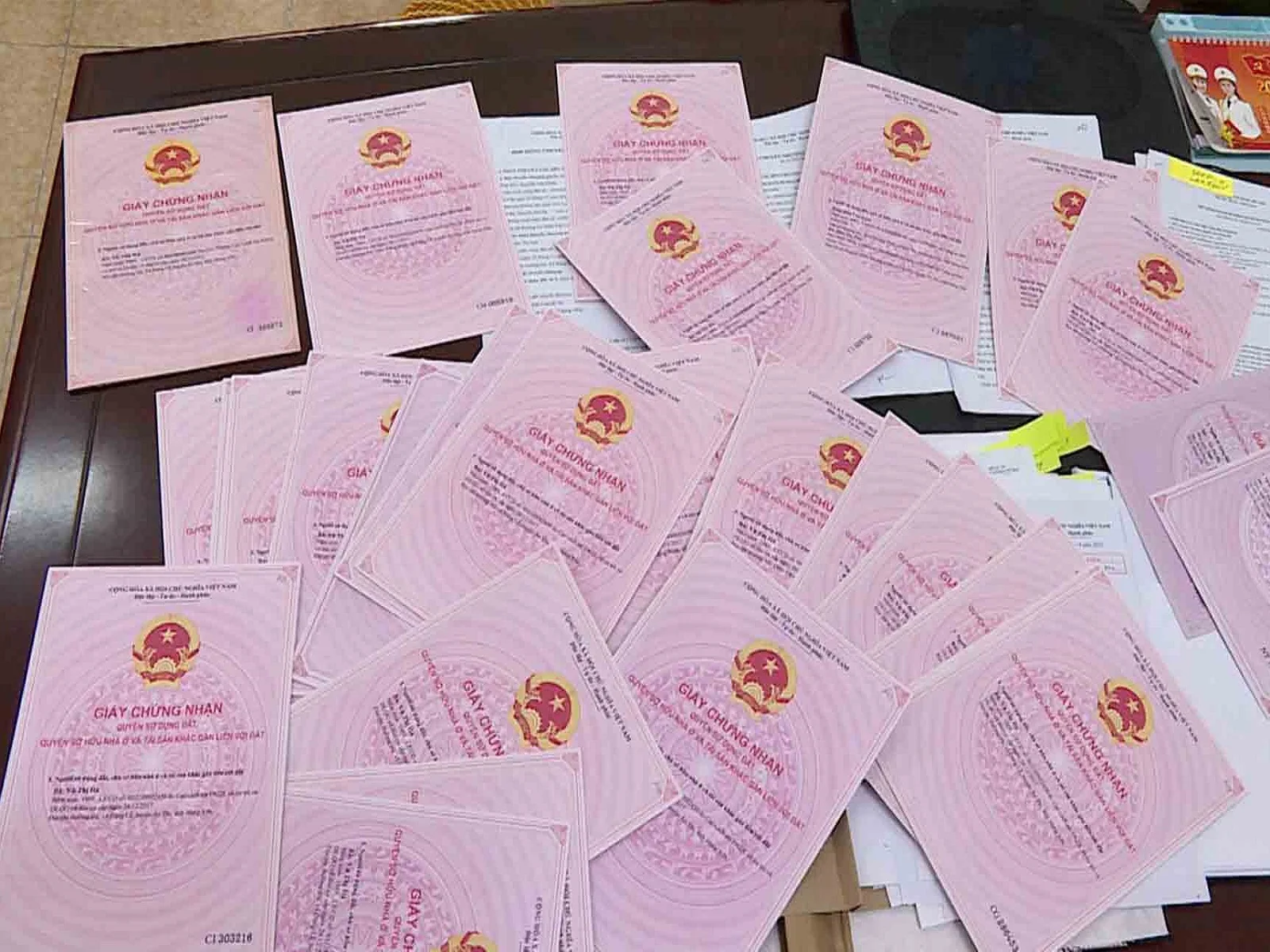
Even when you have a valid SPA and the 30% quota is available, there is one more hurdle: actually receiving your Pink Book.
Vietnam’s bureaucracy moves slowly. Many foreign owners report waiting 2-5 years for their Pink Book to be issued after completing their purchase. During this limbo period, you hold an SPA contract but no registered title.
Without a Pink Book, selling the property becomes complicated. You can technically transfer the SPA contract to another buyer, but this is messier and may reduce your sale price. Sophisticated buyers know to discount properties without completed documentation.
Due diligence tip: Before purchasing in any building, ask existing foreign owners about their Pink Book experience. Join expat Facebook groups or forums where these stories are shared openly. A track record of delayed documentation is a red flag about the developer and the project.
Summary: The 4 Rules of Foreign Ownership
Yes, you can buy property in Vietnam as a foreigner. But go in with open eyes:
- Verify the 30% quota is available — in writing — before paying any deposit.
- Insist on an SPA structure with Pink Book eligibility. Avoid LTL leases unless you have a specific, informed reason.
- Accept that ownership is 50 years, not forever. Build this into your investment thesis.
- Budget for delays. The Pink Book may take years. Your exit strategy should account for this.
The Saigon River view is real. So are the complications. Understand both before you sign.
The Buying Process: Four Stages
Vietnam’s property purchase process follows a predictable sequence, particularly for off-plan (pre-construction) units, which represent the majority of foreign purchases in prime developments.
Stage 1: The Deposit (Đặt Cọc)
You pay a reservation deposit to secure the unit. This is typically 10-30% of the purchase price, depending on the developer and project. The deposit confirms your intent and removes the unit from the market.
What to verify before paying:
- Written confirmation that foreign quota is available
- Confirmation that the project is licensed for foreign SPA ownership
- Clear terms on what happens if you withdraw (forfeit deposit? partial refund?)
Do not pay a deposit based on verbal promises. Get documentation.
Stage 2: SPA Signing
Within 15-30 days of the deposit, you sign the Sales Purchase Agreement. This is the formal contract that establishes your ownership rights (subject to the 50-year term and Pink Book issuance).
The SPA specifies:
- Total purchase price and payment schedule
- Expected handover date
- Penalties for late delivery by the developer
- Your obligations and the developer’s obligations
Have a Vietnamese lawyer review the SPA before you sign. This is not optional. The cost is modest (a few hundred dollars). The protection is significant.
Stage 3: Installment Payments
For off-plan properties, you do not pay the full amount upfront. Instead, you pay in installments tied to construction milestones. A typical schedule:
| Milestone | Payment |
|---|---|
| Deposit | 10-30% |
| Foundation complete | 10-15% |
| Structure complete | 10-15% |
| M&E installation | 10-15% |
| Interior finishing | 10-15% |
| Handover | 10-20% |
| Pink Book issuance | 5% (final) |
The exact percentages vary by developer. The principle is the same: your payments are staggered over the construction period, which reduces your exposure if the developer defaults mid-project.
Stage 4: Handover (Bàn Giao)
Construction complete. You inspect the unit. You pay the final installment. The developer hands you the keys.
Timeline reality: For off-plan purchases, expect 2-3 years from deposit to handover. Delays are common. Budget for 6-12 months of slippage beyond the promised date.
After handover, the Pink Book process begins — which, as covered above, may take another 2-5 years.
Total timeline from deposit to Pink Book in hand: 4-8 years is realistic.
The Payment Rule: No Suitcases Allowed
This is non-negotiable: All funds must enter Vietnam through legal banking channels.
You cannot buy property with cash. You cannot wire money from an undocumented source. The Vietnamese government tracks foreign capital inflows for real estate purchases.
How It Works:
- You wire funds from your overseas bank account (in USD, EUR, or other foreign currency) to a Vietnamese bank.
- The Vietnamese bank converts your foreign currency to VND at the prevailing exchange rate.
- The bank issues documentation proving the source and amount of funds.
- This documentation is required for your SPA and, eventually, your Pink Book application.
If you cannot prove that your purchase funds entered Vietnam legally, you will face problems: the developer may refuse to process your SPA, the government may refuse to issue your Pink Book, and selling later becomes complicated because buyers and their banks will ask questions.
Keep all wire transfer receipts and bank documentation. You will need them for years. For the cheapest ways to transfer large sums, see my guide on sending money to Vietnam.
Taxes: What You Will Pay
Vietnam’s property taxes are relatively straightforward, but you need to budget for them.
When Buying (New Units)
VAT: 10% on the purchase price (for new units from developers). This is typically included in the quoted price, but confirm with the developer. Some quote prices “before VAT” to make the number look lower.
Registration Fee: 0.5% of the property value. Paid when registering ownership with the government.
When Selling
Personal Income Tax: 2% of the selling price. This is a flat tax on the gross sale amount — not on your profit. If you buy for $200,000 and sell for $250,000, you pay 2% of $250,000 ($5,000), regardless of your $50,000 gain.
This is simpler than capital gains tax systems in many Western countries, but it also means you pay tax even if you sell at a loss.
Rental Income
If you lease your property to tenants, you owe 5% VAT + 5% Personal Income Tax on rental income. Total effective tax on rental income: 10%. For a detailed calculation of what this means for your net yield, see my rental yield reality check.
The Insider Alternative: Why Stocks Might Be Smarter
Here is the uncomfortable truth that no real estate agent will tell you:
For most foreign investors, buying Vietnamese real estate stocks is a better deal than buying physical property.
The Case for Vinhomes (VHM) and Nam Long (NLG)
Instead of purchasing a $200,000 condo in District 2, consider putting that capital into shares of Vietnam’s leading property developers.
Vinhomes (Ticker: VHM) is Vietnam’s largest residential developer. They build the luxury projects that foreigners want to buy — Vinhomes Central Park, Vinhomes Grand Park, Vinhomes Ocean Park. When you buy VHM stock, you own a piece of the company that controls the largest land bank in the country.
Nam Long (Ticker: NLG) focuses on mid-market housing. They are a pure-play on Vietnam’s emerging middle class upgrading from apartments to proper homes.
Why Stocks Beat Physical Property
| Factor | Physical Condo | VHM/NLG Stock |
|---|---|---|
| Ownership Term | 50 years (maybe renewable) | Perpetual (no expiration) |
| Pink Book Required? | Yes (2-5 year wait) | No |
| Liquidity | Months to sell; legal complexity | Sell in seconds (T+2.5 settlement) |
| Minimum Investment | $150,000-$300,000+ | ~$500 (100 shares) |
| Diversification | One unit, one location | Exposure to entire portfolio |
| Legal Hassle | SPA, lawyers, taxes, documentation | Open brokerage account, buy |
| Currency Risk | Locked in VND asset | Same, but easier to exit |
| Rental Yield | 3-5% gross (minus hassle) | Dividend yield + capital gains |
The Math
A $200,000 condo in Thao Dien might generate $700-$1,000/month in rent — call it $10,000/year gross, or 5% yield before expenses. After management fees, maintenance, vacancy, and taxes, you are looking at 3-4% net.
Meanwhile, you have $200,000 locked in an illiquid asset, a 50-year ownership clock ticking, a Pink Book that may take years to arrive, and zero ability to sell quickly if you need capital.
The same $200,000 in VHM stock gives you exposure to Vietnam’s real estate growth, dividend income, the ability to sell any portion at any time, no lawyers or paperwork, and perpetual ownership with no 50-year limit.
When Physical Property Makes Sense
To be fair, there are scenarios where buying a condo is the right call:
- You will live in it. If you need a home in Vietnam, buying may beat renting over a long horizon. Run the numbers in my renting vs buying analysis.
- You want a “trophy asset.” Some investors value the psychological satisfaction of owning a tangible property in a specific location.
- You have a long time horizon and high risk tolerance. If you can wait 10+ years and accept the bureaucratic uncertainty, physical property may outperform.
- You are married to a Vietnamese citizen. Freehold ownership changes the calculus entirely.
For everyone else — especially those seeking pure investment exposure to Vietnam’s property market — the stock market offers a cleaner, faster, more liquid alternative. I profile the strongest names in the Vietnam “Magnificent 10” Blue Chips.
The Bottom Line
The process is long. Deposit to handover is 2-3 years. Add another 2-5 years for your Pink Book. Budget for a decade-long commitment.
The money must be clean. Wire transfers only. Keep all documentation. No exceptions.
The taxes are manageable. 10% VAT on purchase, 2% on sale, 10% on rental income. Simpler than most Western systems.
The alternative is compelling. VHM and NLG give you real estate exposure without the 50-year limit, without the Pink Book delay, and with the ability to exit in seconds. For most investors, this is the smarter path. Learn how to get started in the Ultimate Guide to Vietnam Stock Market.
The Saigon River view is beautiful. But liquidity is beautiful too.
Disclaimer: This is not legal advice. Real estate laws in Vietnam change. Before signing any contract, hire a local lawyer to review the SPA. Do not rely solely on the sales agent.
Frequently Asked Questions
Can a US citizen buy property in Vietnam?
Yes, US citizens can buy condominiums and apartments in approved commercial housing projects in Vietnam. The Housing Law of 2014 grants this right, subject to three constraints: a 30% foreign ownership quota per building, a 50-year ownership term (renewable once), and restriction to condos only (no land purchases). You’ll need a valid passport and must wire purchase funds through official banking channels.
What is the Pink Book in Vietnam real estate?
The Pink Book (Sổ Hồng) is Vietnam’s official Certificate of Land Use Rights and Housing Ownership — the only government-registered document that proves legal property ownership. For foreign buyers, the Pink Book confirms your 50-year ownership rights. Without it, you cannot sell freely or use the property as collateral. Processing typically takes 2-5 years after purchase completion, which is a major consideration for foreign investors.
What is the 30% foreign ownership rule in Vietnam?
Vietnamese law caps foreign ownership at 30% of total units in any single condominium building. Once this quota is filled, new foreign buyers can only purchase from existing foreign owners within that building — not from Vietnamese nationals. Popular developments like Vinhomes Central Park and Masteri Thao Dien frequently hit their 30% cap, requiring buyers to verify quota availability in writing before paying any deposit.
What happens after 50 years of foreign property ownership in Vietnam?
After the initial 50-year ownership period, Vietnamese law allows a one-time extension of another 50 years, subject to government approval. However, this renewal is not automatic — it depends on future government policy. If the extension is not granted, the property reverts to the state or must be sold. Foreigners married to Vietnamese citizens are exempt from this limitation and receive freehold (permanent) ownership rights.
What taxes do foreigners pay on Vietnam property?
When buying new units: 10% VAT (usually included in the listed price) plus 0.5% registration fee. When selling: a flat 2% tax on the gross sale price (not on profit). On rental income: 10% total (5% VAT + 5% personal income tax), with no deductions allowed. Vietnam’s property tax structure is simpler than most Western countries, but the 2% sale tax applies even if you sell at a loss.
Keep Reading
- Check prices first: Vietnam Property Prices 2026 (HCMC vs Hanoi vs Da Nang)
- Run the rental math: What Is the Average Rental Yield in Vietnam? (Reality Check)
- Buying in HCMC? Best Areas to Buy Property in HCMC for Foreigners
- Considering Da Nang? Da Nang Real Estate Guide for Foreign Buyers
- Prefer stocks? The Ultimate Guide to Vietnam Stock Market